[:pt]A alma imoral[:en]Our immoral soul[:]
[:pt]
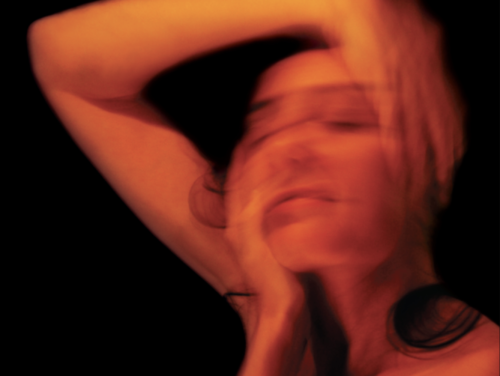
Clarice Niskier em A alma imoral :: photo Dalton Valério
‘Há um olhar que sabe discernir o certo do errado e o errado do certo. Há um olhar que enxerga quando a obediência significa desrespeito e a desobediência representa respeito. Há um olhar que reconhece os curtos caminhos longos e os longos caminhos curtos. Há um olhar que desnuda, que não hesita em afirmar que existem fidelidades perversas e traições de grande lealdade. Esse olhar é o da alma.’
‘A alma imoral’ é uma das mais belas e impactantes peças de teatro dos últimos anos – uma adaptação teatral elaborada e interpretada (de forma elegante e sensível) por Clarice Niskier, a partir do livro homônimo do rabino Nilton Bonder. Partindo do conceito de que, por sua própria essência, a alma humana é transgressora, o texto confunde, desconstrói e reconstrói visões milenares sobre o que sejam corpo e alma, certo e errado, obediência e desobediência, traído e traidor.
Bonder coloca a tomada de consciência do ser humano sobre sua própria existência como a origem do corpo moral, que passa a ser o guardião dos costumes, da conformidade e da adaptação – o mantenedor das tradições do passado, que por meio delas colabora para a reprodução da espécie. Já a alma – que carrega em si a rebeldia e a capacidade da mutação – é aquela que possibilita pensamentos e condutas que rompem com essa moral estabelecida, colaborando assim para evolução dessa espécie. Para ele, é a tensão gerada por essas duas naturezas conflitantes e interdependentes, e o diálogo que se constrói entre essas forças – a conservadora e a transgressora – que permite ao homem transcender a si mesmo.
‘Não há tradição sem traição. E não há traição sem tradição.’ Basta olhar para a história da humanidade para constatarmos, nas mais diversas formas da expressão humana, a beleza e a verdade dessa afirmação: de Michelangelo a Picasso, de Beethoven a Stockhausen, de Isadora Duncan a Pina Bausch, de Brunelleschi a Frank Gehry, de Shakespeare a Guimarães Rosa… a evolução humana depende fundamentalmente de atos que, pela ótica dos costumes e da tradição, são vistos como traições. Mas verdadeira traição seria não dar voz a nossas almas transgressoras, pois são elas que nos permitem o prazer e a evolução em nossa existência.
Sobre a peça: www.almaimoral.com
‘A alma imoral’, Nilton Bonder, 1998, Ed. Rocco.
[:en]
Clarice Niskier :: The immoral soul
“There’s a look that knows how to tell right from wrong and wrong from right. There is a look that sees when obedience means disrespect and when disobedience means respect. There is a look that recognizes the short long paths and the long short paths. There’s a look that sees through, that does not hesitate to point out that there are wicked fidelities and betrayals of great loyalty. This is the soul’s look.”
‘Our immoral soul’ is one of the most beautiful and striking theater plays I have seen in recent years – a theatrical adaptation elaborated and interpreted (elegantly and sensitively) by Clarice Niskier, from the homonymous book by Rabbi Nilton Bonder. Based on the concept that the human soul is transgressive in its very essence, the text confuses, deconstructs and reconstructs ancient views on the concepts of body and soul, right and wrong, obedience and disobedience, betrayer and betrayed.
Bonder establishes the awareness of human beings on their own existence as the origin of the moral body, which then becomes the guardian of customs, conformity and adaptation – the keeper of past traditions, who works through them for the reproduction of the species. The soul – which carries the rebellion and the capacity of mutation – is one that allows thoughts and behaviors that break the established moral, thereby contributing to the evolution of this species. He says it is the tension generated by these two conflicting and interdependent natures, and the dialogue between these forces – the conservative and the transgressive – that allow human beings to transcend themselves.
“There is no tradition without betrayal. And there is no betrayal without tradition.” Just look at the history of mankind only to find, in various forms of human expression, the beauty and truth of this statement: from Michelangelo to Picasso, from Beethoven to Stockhausen, from Isadora Duncan to Pina Bausch, from Brunelleschi to Frank Gehry, from Shakespeare to Guimaraes Rosa … human evolution depends mainly on acts that, through the eyes of customs and tradition, are deemed as betrayals. But betrayal would be not to give voice to our transgressive souls, for they are the ones who provide us with pleasure and evolution in our existence.
About the play :: www.almaimoral.com
‘Our Immoral soul’, Rabbi Nilton Bonder, 2001, Shambhala.
[:]